EV Charger Installation in Carmel, Indiana: What Homeowners Should Know
Everything that actually goes into wiring a home EV charger in Carmel, from the panel check to the permit.
September 15, 2026 · 4 min read
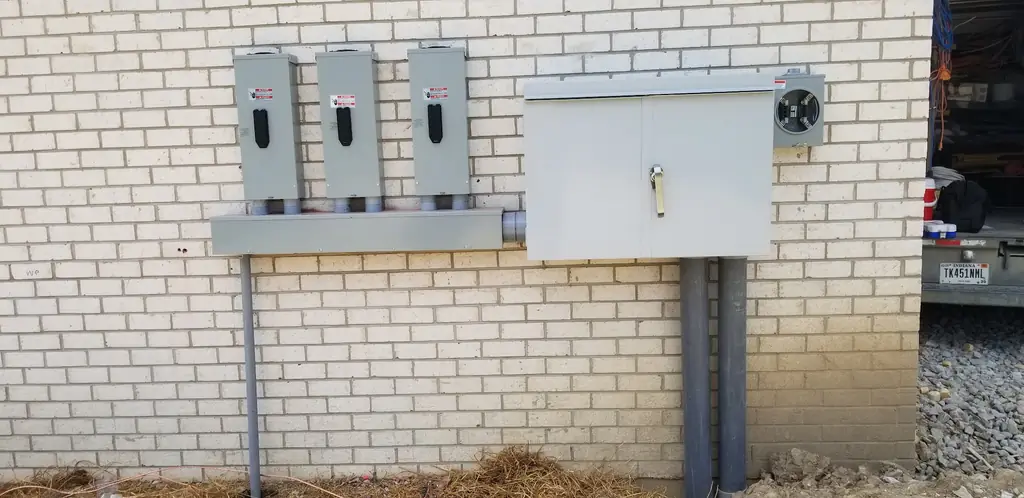
Level 1 or Level 2: the difference is the circuit
Most people cross shop EV chargers the way they would shop a phone charger, plug it in and wait. Home charging really splits into two categories, and the difference is what is behind the wall. A Level 1 charger uses a standard 120 volt household outlet, the kind already in most garages, and adds roughly 2 to 5 miles of range per hour. It works, and for a driver with a short commute and an overnight window, it can be enough. Level 2 charging runs on a dedicated 240 volt circuit, the same voltage class as an electric dryer or range, and adds roughly 10 to 60 miles of range per hour depending on the vehicle and the charger itself. For most households that drive daily, Level 2 is the one that actually keeps up.
Why the panel gets checked before anything else
A Level 2 charger is a real, continuous electrical load, and before we run a dedicated circuit out to your garage, we do a load calculation on your existing panel. That calculation looks at everything already drawing power in the home, the range, the dryer, the HVAC system, and figures out whether there is room left for a charger circuit without overloading the service. The good news for a lot of Carmel homeowners: many of the 200 amp panels common in newer construction here can carry a Level 2 charger without needing a panel upgrade at all, once it has actually been assessed. Older homes, or homes already running close to capacity, sometimes do need a panel upgrade first. There is no way to know which situation you are in without the calculation, and that is the first step, not a guess.
Carmel runs its own permitting office
Carmel maintains its own permitting office, separate from the rest of Hamilton County, and an EV charger circuit is not a job to skip that step on. The circuit has to be permitted, inspected, and approved before it is considered done. That is not a formality tacked on for paperwork's sake. It is what protects you if something ever goes wrong with the wiring down the road, and it is what a licensed contractor handles as a normal part of the install rather than leaving on the homeowner's plate.
The federal tax credit has a licensing requirement built in
If you are planning to claim the federal 30C tax credit for your home charger installation, the credit requires a licensed installer and proper permits. That rules out DIY or handyman installation twice over. Under Indiana law, this work has to be done by a licensed contractor regardless of the tax credit, and the credit adds its own paper trail requirement on top of that. Skipping the license to save a little on the install can end up costing the credit too.
What the install day looks like
A typical residential Level 2 install runs about 2 to 6 hours once the permit is in place, most of that time spent running the new circuit from the panel to the charger location and terminating it correctly. If a panel upgrade turns out to be necessary, plan on more time, since that is a separate piece of work that has to happen first. Either way, the sequence is the same: load calculation, permit, install, inspection, and then you are plugging in at home instead of hunting for a public charger.
Not every garage is the same job
Newer Carmel neighborhoods near West Clay or along the 146th Street corridor tend to be straightforward garage installs. The panel and the garage are close together and the run is short. Homes in older sections closer to the Arts and Design District can need more complex routing to get the circuit from the panel to the charger location cleanly, which is part of why a look at the house happens before a quote, not after.
- A permit is required for a home EV charger circuit in Carmel.
- DIY and handyman installation is not legal in Indiana. A licensed contractor is required.
- A typical Level 2 install takes 2 to 6 hours once permitted.
- Not every home needs a panel upgrade. Many do not, but it has to be checked, not assumed.
Burtner Electric has been wiring homes across Hamilton County since 1986, and EV charger installation is one more piece of that same work: get the load calculation right, pull the right permit, and do the install so it passes inspection the first time. If you are in Carmel or anywhere else in the service area and you are thinking about a home charger, call 317-773-7663 and we will walk through what your panel can support.
Burtner Electric, 317-773-7663
Call 317-773-7663More articles
What a Tripping Breaker Is Actually Telling You
A breaker that trips once is doing its job. A breaker that keeps tripping is trying to tell you something.
Sizing a Standby Generator: Whole Home or Essential Circuits
The right generator size depends on what you actually want covered when the power goes out, not the biggest number on the shelf.